
46. The Dance World of Katti Lanner
7th May 2026
Dance historian and author Dr Geraldine Morris in conversation with the Clapham Society History Group
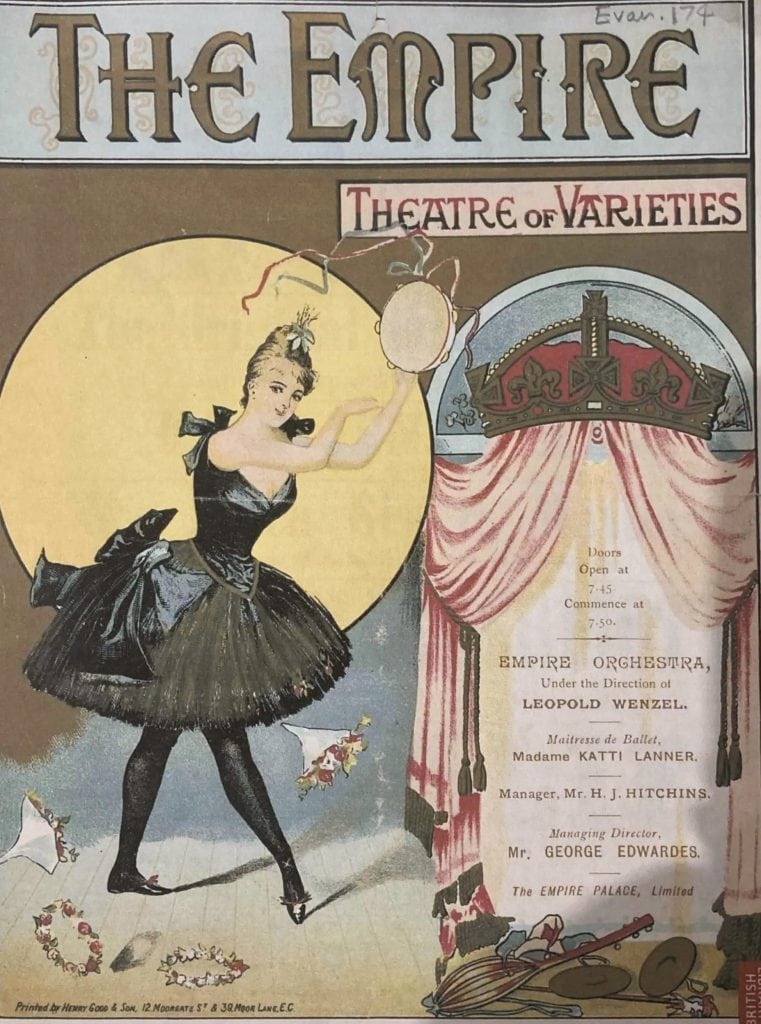
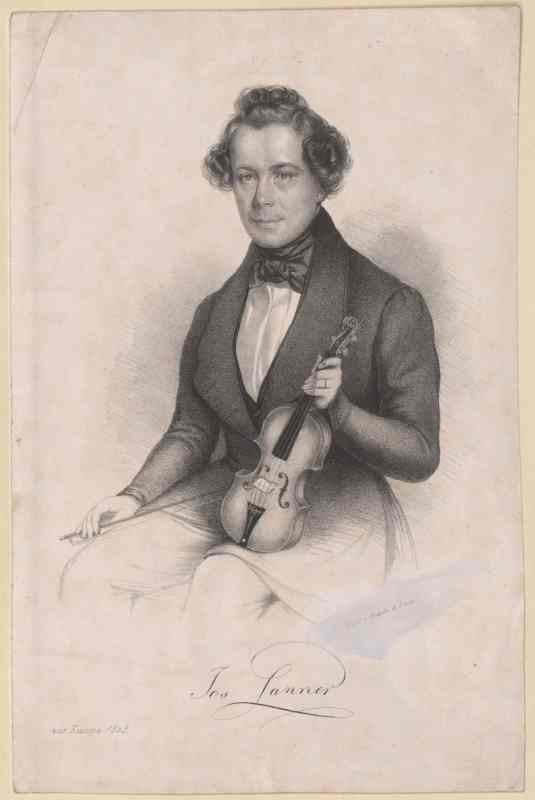
Katharina Josepha Lanner, universally known as Katti, was born in Vienna on 14 September 1829. Vienna, then capital of the Austrian Empire, was also a capital of music: the home of Hayden, Mozart, Beethoven, Schubert and of course the Strausses. Katti’s father, Josef Lanner (1801-1843) was celebrated as the waltz king of Vienna, who had transformed the waltz from a peasant dance into an orchestral one, making it suitable for the ballrooms of high society. Music was formative in her early life, and her inherited musicality added a special quality to her dancing. She began learning ballet, aged 8, at the Hofoper in Vienna, showed great promise and at the age of 14 was invited to join the Vienna Opera Ballet, where she began earning a living as a professional dancer. Highly praised by Fanny Elssler[1], as “the pagan dancer” , she also won great acclaim for her role as the Dumb Girl of Portici in Daniel Auber’s opera of the same name. Katti spent the next 10 years in Vienna: dancing principal roles, and also with the ballet ‘greats’ of the era Marie Taglioni, Fanny Elssler, and Lucille Grahn. Auguste Bournonville, the celebrated Danish choreographer, recognised her talents particularly, and created a main role for her in his ballet: Der Toreador.
Katti’s father died the year she turned professional in 1843, and she lost her mother, Franziska Jahns Lanner, 12 years later. In her mid 20s, no longer having family in Vienna, she decided to leave the company and set off on her own to dance in Germany: where she performed in Dresden, Munich and Berlin. At that time dancers were peripatetic, and would be invited to perform specific roles by a theatre. The role of Giselle became her trade-mark performance: putting her on the map in Germany, and as far distant as America. Katti’s acclaim increased everywhere she performed it: a critic for a Lisbon newspaper, for example, calling her simply “the best ballerina known…” She also danced the role of Myrthe the Queen of the Wilis[2] in the same ballet. It was also in Germany Katti began her secondary career as a choreographer. By 1864 Katti was settled in Hamburg as ballet mistress; and it was there that she married the ballet master and dancer: Johann Geraldini. Over the following four years they had three daughters: Katharina, Albertina and Sophie, but the marriage itself was not destined for longevity. By 1868 the couple had separated. The split however seems to have been fairly amicable, as her then ex-husband ran the company she set up, the Viennese Ballet and Pantomime Troupe, which toured extensively for 4 years to Scandinavia, Russia, France, Portugal, America, and England. Katti herself was first invited to London in 1870 to dance the role of Giselle at Drury Lane: returning afterwards to Germany. She returned to London in 1873 where she choreographed a ballet for 50 children in A Midsummer’s Night’s Dream for the American writer and theatre director Augustin Daly, which was performed in the open air at the Crystal Palace. In 1875, at the invitation of the director of Her Majesty’s Theatre in the Haymarket, she took over the National School for training which he had established in Tottenham Court Road. Over the following four years she was also made ballet mistress at Her Majesty’s Theatre, a theatre made famous by romantic ballerinas in the 1840s. Undaunted by hard work she continued to run the school at the same time as being ballet mistress. She gained a reputation for strict discipline and her pupils, mainly girls, mostly came from working class backgrounds. Their education was free of charge, but when they began earning, they were required to repay her, small amounts from their meagre salaries, for their years in the school. Ballet has a strictly codified set of steps, called the danse d’école [3], all of which have French names such as: glissade, chassé, battement, jeté. The National was the first, and for a period only, school in London teaching the danse d’école in a knowledgeable way, and Katti continued to run it for the rest of her life. Other schools taught what was called fancy dancing. Mrs Wordsworth, for example, was the main society teacher, even teaching Queen Victoria’s grandchildren, and the dancing comprised hops, skips, lots of running, a few ‘graceful poses and twirls. Other famous pupils of Mrs Wordsworth included, Ninette de Valois, who would later found the Royal Ballet and Royal Ballet School, who has been quoted as commenting: ‘fancy dancing was taught there and very fancy it was too![4]’
Katti finally retired from performing to devote herself to teaching and choreography in 1887 when, at the age of 59, she became the ballet mistress and choreographer for the Empire Music Hall, Leicester Square. Music hall, at the time it should be noted, was not a respectable place in which to be seen. The writer, Thomas Anstey makes the point that if one went to the Empire or Alhambra, “…one did not choose to have it known. The music-hall was not a proper subject of conversation at the dinner table, or the tea table. No respectable British matron would have dreamed of being seen within its walls, much less of taking her daughters there.” But the ballet spectacles, began to raise the status of the big theatres. Discussing the choreography of Katti Lanner the critic Samuel Bensusan remarked “her artistic development was proceeding steadily”, “she gave to her pupils some of the grace and charm that had marked her own work in dance and pantomime.[5]”
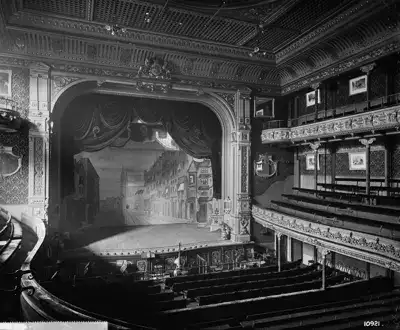
Her work with the Empire gave Katti celebrity status; and to understand this, it’s important to identify the hierarchy of the music hall world. From the 1880s The two main music hall theatres were the Empire and the Alhambra, both in Leicester Square. Their principal entertainment was the ballet and their status relied upon its spectacle. Before and after the ballet however there would be variety acts such as: magic, juggling, clog dancing, acrobatic tricks, lewd songs and jokes, and other circus-like performances. Prior to the development of the ballet the music hall was dismissed by the middle and upper classes as vulgar, and certainly unsuitable for ladies. Ballet performances however began to change this status, and the change can justly be said to be down to Katti Lanner: working with a composer and set designer to create a ‘total art work’.[6] According to a writer of the era: the music halls could be divided into four categories: the “aristocratic” variety theatres in Leicester square, followed by the smaller West End halls, the larger halls in less fashionable suburbs, and finally, the minor music halls of the poor and squalid districts. The Empire and Alhambra, where the big budget, spectacularly set ballets were performed, were distinguished by carpeted floors and imposing façades. Middle class members of the audience apparently condemned the rest of the show as padding: through which they talked loudly to signal their contempt. Each hall however had a large and excellent orchestra, and stage footmen dressed in livery. Middle and upper-class audiences wore evening dress; and ladies were present in the boxes.
The Empire and Alhambra competed to produce the best, most spectacular dance works. Rather than relying upon the temporary dancers performing in lesser theatres and the pantomime, the two theatres had each formed an in-house ballet company: thus founding the two earliest ballet companies in England. Katti Lanner meanwhile, as ballet mistress, teacher and choreographer at the Empire, occupied a prestigious and highly unusual position for a woman, as such jobs were habitually reserved for men. Her work in the music hall was highly celebrated; and on average 2 new ballets were produced every year. More than £10,000, equivalent today to in excess of £1,000,000, could be spent on a production with a corps de ballet of more than 100. The corps de ballet, trained by Katti, provided the visual display as: flowers, fauna, dancing blossoms, fairies, artifacts, jewels or in human form as imagined inhabitants of exotic lands. Functioning as moving tableaux of colour and costume, their steps were based on simple shapes from social and national dancing as well as steps from the danse d’école, and they provided a visual framework for the principal dancers. Their body shapes, however, embraced a much greater variety of heights and sizes, than is presently seen. Today’s carefully graded dancers, with their long thin legs and shortish bodies would by contrast have been most out of place at the Empire and Alhambra, where thinness was not admired.
Similarly, the full evening classical ballets we know today, like Giselle, were rarely performed in London after 1871. Preferred works in the music halls, were composed around patriotic spectacle and contemporary culture such as: On Brighton Pier, The Girl I Left Behind Me, and Round the Town. “In common with late Victorian and Edwardian theatre in general, the main production value of the music hall was spectacle[7]” which was achieved through décor, electric stage lighting and the manipulation of as many as 100-200 dancers. A good example of a music hall ballet could be found in Katti Lanner’s The Kingdom of Persian Cats, known as Katrina and described here in a contemporary account: ‘The new ballet at the Empire is a delightful excursion into fairy-land: the real and only home of the ballet. The two scenes “a humble attic near Paris” and “the Kingdom of Persian cats” are alike, fanciful, impossible and delightful’. This mise en scéne gives little as to the story, but Katti, reflecting her name, was a great cat lover, having five of her own, which she said in an interview, inspired the ballet. The writer deals mainly with the appearance of the work, relating little of the story or the dancing, but stated that Katrina had no aim other than to be beautiful and impossible. “It is a comedy in masquerade. It might almost be said that if it is these that are the excuse for the ballet, nothing so excellent of its kind has ever been seen in England. The stage is all gems, and flowers, and lights. At the back is an illuminated glass staircase, with gold and white hangings, and it is against this background that the masque of cats and birds, of mortals and immortals acts itself whimsically out. It is, moreover, the prettiest novelty to be seen just now in London.’ Katrina was stage designer Karl Laudenschlager’s[8] first undertaking for the ballet in England and, working closely with Katti, he produced a style of decoration entirely new to the London stage.
Of the dance world within which Katti lived and worked comparatively little has been written; and of that much can be described as wholly unreliable. Very little for example is known about the dancing, while narratives by male authors frequently relate imagined intimate relationships with the ballet girls: writers apparently believing that the dancer focused on them while dancing.[9] In reality, despite a Member of Parliament suggesting that the bulk of the girls led immoral lives, nothing could have been further from the truth. According to Phyllis Bedells[10], these writings infuriated the dancers and nearly led to a strike. The dancers, actually comprised ‘a lot of sedate and almost narrowminded girls who had been in the same theatre for years, and whose lives were of the strictest and simplest”.[11] Nineteenth century women were not expected to work, let alone in the theatre. Being in the theatre was frowned upon; actresses were regarded as ‘loose women’ and dancers were perceived as even worse. For a working-class woman not only to earn an independent wage, but to do so in the very public arena of the theatre, was so at odds with the patriarchal values of the period that her motivation and connection with the stage could only be understood by some critics if construed as sexual. Most of what we know of the real life of a music hall dancer comes from Carnival: a novel by Compton Mackenzie who wrote a fictional work centred upon a ballet girl. Published in 1912, it was a huge commercial and literary success, as well as being made into 3 separate films; and because Mackenzie, himself, had worked at the Alhambra in 1910, his account of the life and morality of the ballet girls is thought fairly accurate. In the absence of any other accounts, it remains the nearest we have to a genuine narrative of the life of a dancer.
Katti Lanner moved to Clapham in 1892. Despite being a dancer and working in the theatre, however, she held on to her reputation as a respectable woman while in reality living for years, unmarried, with her dance and life partner, Francesco[12], and his elderly mother. They first lived at 49 Lansdowne Gardens, Stockwell, although the house was in Katti’s name and his presence was not included in the 1880 census. Katti moved to Clapham after Francesco died on 1 May 1892[13]. Despite having long been a couple, their relationship was kept secret, but probate was granted to Katharina Geraldini: described as his widow. He left £3534 17s, an amount equivalent in 2026 to nearly £400,000, in his will bequeathing Katti’s daughter, Cora de Mere, who was described as his god-daughter £1000[14]. The residue of his estate he left to Katti. It was probably in 1892, she also moved her school to Clapham. Continuing to both choreograph at the theatre, and teach at the school she was renowned for her formidable work ethic: working daily from mid-day to midnight. It was said she never missed a performance, and was always ready to teach next morning. Producing a new ballet, on average, took ten weeks. Rehearsals began at the Athenaeum Hall on Tottenham Court Road, with the production only arriving at the theatre when almost all the work was finished. Class would begin at 10.00 am, followed by rehearsal at 12.00, which would finish at 4.00pm. Interviewed in The Sketch in 1895 she commented ballet was her very life and she didn’t mind the amount of work: saying she had thought of retirement, but couldn’t conceive of a life without ballet. At the Empire all the leading dancers were from Europe, many of whom recognised and respected Katti Lanner’s untiring determination to preserve the traditions of classical ballet in England.
She also remained a star with her public and her appearance before the curtain was, as one theatregoer put it “the consummation of a ‘first night’ at the Empire”. She would emerge from the wings, her short stout body encased in black silk, with gold chains hanging about her neck and her head crowned by a heavy fair chignon, the arrival of which from a neighbouring hairdresser was one of the most anxiously awaited moments in the life of the Empire. It was sometimes difficult to realise that this ungainly figure had once been an elegant dancer herself.’ Joined by Leopold Wenzel and C Wilhelm, they formed a triumvirate to produce the ballets. Her conductor, Leopold Wenzel (1847-1923) was Italian, and described as having “so much knowledge of the full resources of the modern orchestra that it made his scores glow with a wealth of colour that would surely have delighted Berlioz himself.” C. Wilhelm[15], her designer, was lauded for his period designs and above all for his use of colour in the ballets. He worked closely with Katti, and remained at the Empire until the ballet was closed down in 1915.
As detailed above Katti Lanner kept her life away from the stage private, and little is written about her personality. She seems however to have retained one or two eccentricities. Phyllis Bedells for example wrote that during performances she always sat in the front wing and shouted loudly at the dancers if they were out of line or went wrong, apparently oblivious to the fact she could be heard by the audience. Her spoken English was heavily accented, and her grammar problematic, but it appears she had little problem making herself understood. At No 40 Northside, where she lived with her, unacknowledged[16] but much loved, daughter Cora de Mere, she employed a number of people. Apart from the domestic staff, and “the ancient coachman,” the household also included an old secretary called Mr. Barker[17], a tall, thin, former solicitor’s clerk, who was always immaculately dressed in frock coat and top hat, and was mercilessly harried by Madame, as she was known, if anything went awry. The coachman drove Mme Lanner to and from the theatre each day in her elderly brougham[18]. It’s said the coachman lacked a stamina akin to his mistress, and occasionally, when the performance ended late, would drop off to sleep: holding up assorted hansom cabs, four-wheelers, and other traffic.
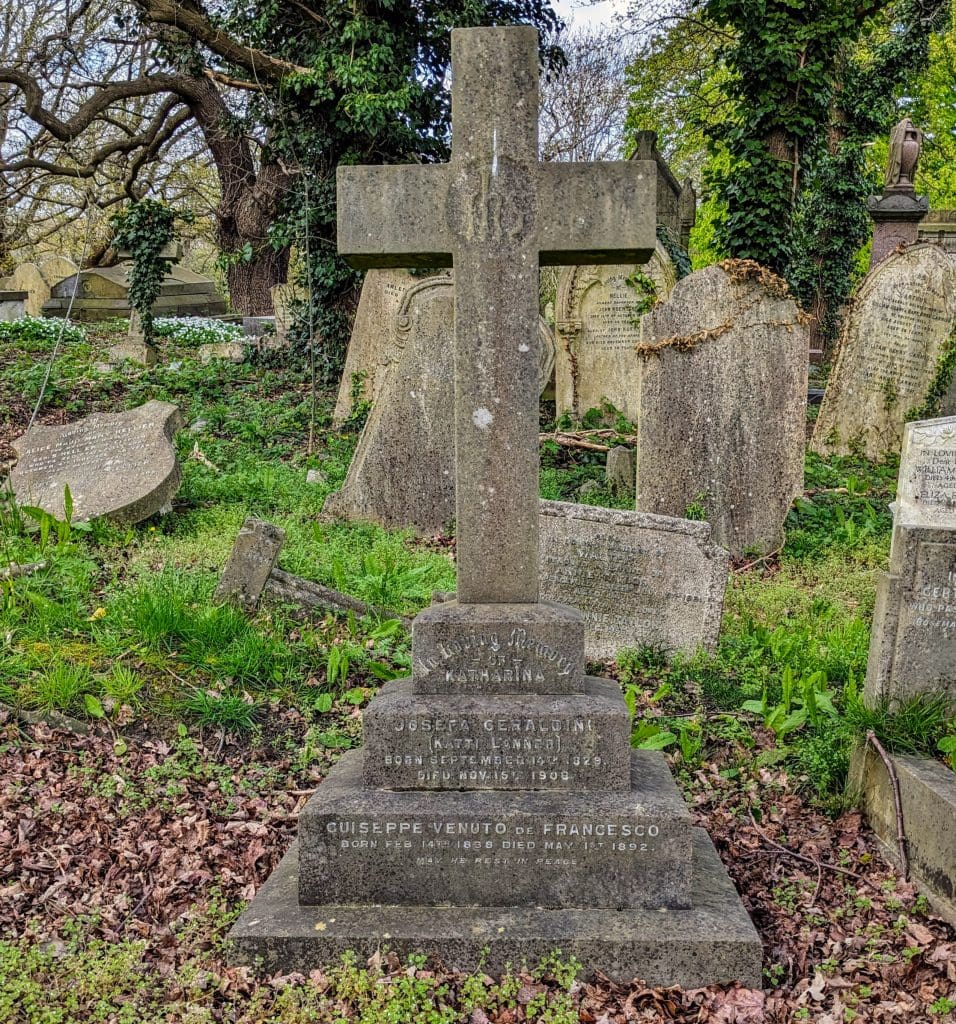
Katti Lanner died, aged 79, on 15th November 1908, at her home on Clapham Common North side. The house, which today is divided into flats, hasn’t changed much externally, but very few will know that she lived there for 16 years. Her funeral was held locally at St Mary’s Roman Catholic church on Clapham Park Road and, according to The Era, a beautiful Requiem Mass was sung: ‘the whole ceremony was marked by a simplicity of style, in true accordance with the sweet personality of the dead artist’.[19] Touchingly, the article ended with the comment that her old dog predeceased her by a few hours, although it seems she had not known. Today no record remains of her funeral other than the report that a large gathering attended: friends, relations, members of the National Training School for Dancing, and well-known figures from the Empire theatre, including the manager, Mr. H.J. Hitchins and his wife, as well as Mr and Mrs Thomas F. Britton, formerly of Her Majesty’s Theatre, along with fellow artists and pupils. She was buried beside Francesco in West Norwood Cemetery. In her will she left her house, and the dance school, to Cora de Mere on condition that she changed her name to Lanner, took care of her animals, tended her grave and continued to run the school in Clapham. Cora, who despite living as a member of the household for many years may never have known Katti was her mother, abided by her wishes and the school continued into the 1920s. Cora Lanner, describing herself as a retired teacher of elocution, was still living in the house at the time of the 1939 Register.
In concluding this telling of Katti Lanner’s story the question arises as to her position in the history of English ballet. She arrived as a gifted soloist, and despite touring internationally, settled in London, where her talents as a teacher, choreographer and ballet mistress were encouraged to develop. Certainly in her time she was an artist and choreographer of considerable celebrity, but today appears to have been almost entirely written from the story of English ballet. Ballet remained a facet of music hall throughout her time in the theatre, but without her impetus and ambition it might have stayed there. She was also instrumental in the building of both a training system, and an enthusiastic middle class audience. Serge Diaghilev had higher still ambitions for the ballet. In bringing it to the attention of the upper classes at the Royal Opera House at the time of the coronation of George V: he lifted it from popular culture to high art. It was however thanks to Katti Lanner and her successors that when Diaghilev brought the Ballets Russes to London in 1911, there was already a relatively knowledgeable audience for him to build upon. Away from the theatre however it’s possible Lanner’s somewhat complex personal life[20], wasn’t quite the secret it has been suggested: which in turn would have denied her access to more refined society. It’s even possible her decision to be buried beside Francesco could have been viewed by some as a last defiance against convention. Years later when Ninette de Valois launched her company, which later became The Royal Ballet, historians and critics determined to move on from the music hall ballet; ignoring its cultural significance, and wanting instead to suggest ballet had always been high art. In the real history of English ballet, however, the significance of 19th and early 20th century music hall ballet should, it seems, be lauded rather than ignored: for it created both an audience, and the dancers. Reflecting around a hundred years later it seems Katti Lanner’s legacy remains considerable. In the mid and late 19th century, when interest in the ballet was growing exponentially, she stuck rigidly to training danse d’école, and enforced its discipline upon a new generation of professional dancers, who would themselves later become teachers and continue her legacy. Looking back today it might justly be said she ignited the flame and kept it alive for the great names to come.
[1] Fanny Elssler was a Viennese dancer, described by the French poet and dramatist Theophile Gautier as the pagan dancer, meaning she was very sensual, in contrast to the Christian Maria Taglioni.
[2] https://youtu.be/dhSbSRVzDZM?si=aY1CdW6tYQySbiJSC
[3] Danse d’école (literally “school dance” in French) refers to the formal, traditional rules, techniques, and vocabulary of classical ballet.
[4] Ninette de Valois, Come Dance with Me, London: Dance Books, (1973) p.29
[5] The Sketch, no further information available
[6] This was something created first by Richard Wagner in which narrative, music and (dance) singing all coalesced. Diaghilev, director of the Ballet Russe also devised works based on this principle and it was something Katti also introduced and known in German as Gesamtkunstwerk.
[7] Dance Research, 1995, p. 36
[8] Laudenschlager was better known as King Ludwig of Bavaria’s stage designer for Wagner operas
[9] George Bernard Shaw Immaturity, written in the 1880s published (Constable, 1930)
[10] Phyllis Bedells (9 August 1893 – 2 May 1985) was a British ballerina and dance teacher who in 1914 became the first prima ballerina at The Empire theatre.
[11] Phyllis Bedells, My Dancing Days
[12] Katti’s partner’s full name was Giuseppe Venuto de Francesco, a dancer from Naples: identified in historical biographies as her companion in London. He became Katti’s main dance partner in 1869, and partnered with her when she first came to London in 1871 to dance at Drury Lane.
[13] At the time of Francesco’s death the family, including their 15 year old daughter then called Cora De Mere, were living at 183 Clapham Road, Stockwell, a large detached home which was destroyed by bombing in the London Blitz
[14] Equivalent in 2026 to £111,305.00
[15] C Wilhelm, or simply Wilhelm, was in fact William Charles Pitcher (1858 –1925): the son of a ship builder, born in Northfleet in Kent
[16] In the 1901 census Cora is described as Katti’s ward, rather than her daughter
[17] Both her secretary Thomas Barker, and her coachman Harry Paine, were left legacies in her will in respect of their devoted service
[18] A brougham coach was a light, enclosed, four-wheeled horse-drawn carriage, usually pulled by one horse and designed for two passengers, with space for a driver at the front.
[19] Anon, ‘Funeral of Katti Lanner’, The Era, November 28, 1908, p. 27
[20] On documents including both Francesco’s probate and her own she is referred to as Katharina Geraldini, using her married surname, and implying her divorce might never have been legally finalised