The Future Funding Of Clapham Common
1st July 2026
Earlier this the year, The Garden Museum in Lambeth held a one-day symposium titled “Who Pays For Parks?” There were two main themes from the day.
Firstly if communities want their open green spaces to be well maintained they are increasingly going to have to play a more active role in both financing and managing them. Local groups who care about their parks need to shift their focus from what can “their Councils do?” to what can “we do together?” This is easier to achieve with small parks that have less infrastructure to maintain. Larger open spaces like Clapham Common and Brockwell Park need to have a clear understanding of which aspects the various partners can manage.
Secondly, there is an urgent need to get the right level of the commercialisation of parks. When you ask people to donate or pay, they tend not to. The exception seems to be park benches and trees. People are not likely to give money to parks if they’re not sure what it’s going to, and there is a limit to what people will tolerate in terms of “viable commercial activity”. Most people welcome a well-run café, while many of the same people would not support large events that enclose too much space for too long.
Over the last few years Lambeth has significantly increased the revenue it earns from its parks, not just by way of large events like The Mighty Hoopla in Brockwell Park and Moonwalk on Clapham Common but through increased cafés, sport pitch hires, commercial dog-walker permits and brand partnerships. Altogether this raised £1.8M pounds in 2025. To put this in context, Lambeth spent £16m that year maintaining over 70 green spaces. There was also a separate budget for Capital Investment but that expired at the end of last year. Unless it’s a critical health or safety issue that capital investment budget is effectively gone now.
One very simple solution to address the funding challenge is to place your park in Mayfair where several million pounds of private money was spent developing Grosvenor Square (44 new trees, 70,000 new plants, 80,000 bulbs, and a wetland area).
The other unusual funding model that was highlighted at the symposium was Lee Valley Park (a 26 mile-long park that runs through London, Essex and Hertfordshire). All Council taxpayers in those three areas pay a levy of 92p per year (the Park also relies on income from commercial activities, such as its sports and leisure venues).
Jubilee Gardens on the South Bank and Myatts Fields in Camberwell were cited as good examples of partnerships in both funding and maintenance. They did however highlight the problem of when capital investment for a single project leads to something needing maintenance in the future, with no clear ongoing funding.
One final issue that emerged from the symposium was the need for greater transparency about both how the money is generated and where it is distributed in relation to parks. One reason why some people are opposed to events is that they are not clear about the large amount of revenue they earn and where that money is spent.
A couple of speakers went further to say that there could be more funding for parks available if there was better scrutiny on how councils collect and spend the Community Infrastructure Levy and Section 106 (money secured from new property development to improvements to local infrastructure—such as affordable housing, schools, and transport). The community has virtually no say in where those investments are made and the public could become more vocal in demanding it be used to fund the maintenance of our green spaces like Clapham Common.
A source of funding for open spaces in Lambeth where there is more consultation is something called the Parks Investment Levy, or PIL. For every event that earns revenue on Clapham Common, 20% of that goes directly to Common, and is allocated to priorities identified by Lambeth Parks Department together with the Clapham Common Management Advisory Committee (CCMAC). The latter is a voluntary group of local councillors, elected community representatives, and representatives of interested community organisations. In recent years the PIL has paid for new paths, extra litter bins, bollards, improved signage, and has made significant contributions to the projects listed further below.

What was extremely disappointing was the many projects and investments that have been made in Clapham Common did not get mentioned at the symposium. Over the last 5 years there are many examples of where private investment and community volunteers have worked both independently and in partnership with the Parks Department to make huge improvements. Specifically, the Friends of Clapham Common and Wild Clapham have raised over £400k to invest in the Common. Working in partnership with Lambeth and CCMAC, these projects include:
-Planting 200 trees in partnership with Lambeth, which has increased the overall tree stock by 10%
-Planting hundreds of shrubs and creating new hedges
-Constructing a 1000sq metre new Wetland habitat with a bridge and viewing deck next to Eagle pond
-Creating 7000sq metres of sustainable wildflower meadows
-Restoring the Rose Pergola on West Side
-Landscaping the Wetplay area
-Designing and planting a “pollinator corridor” in the rainwater garden beds along Windmill Drive
-Working with Lambeth to designate over 16 hectares of Local Nature Reserves
-And most recently, camouflaging the unsightly rubbish dump in the centre of the common by the careful renovation of the Green Waste Site (see below)

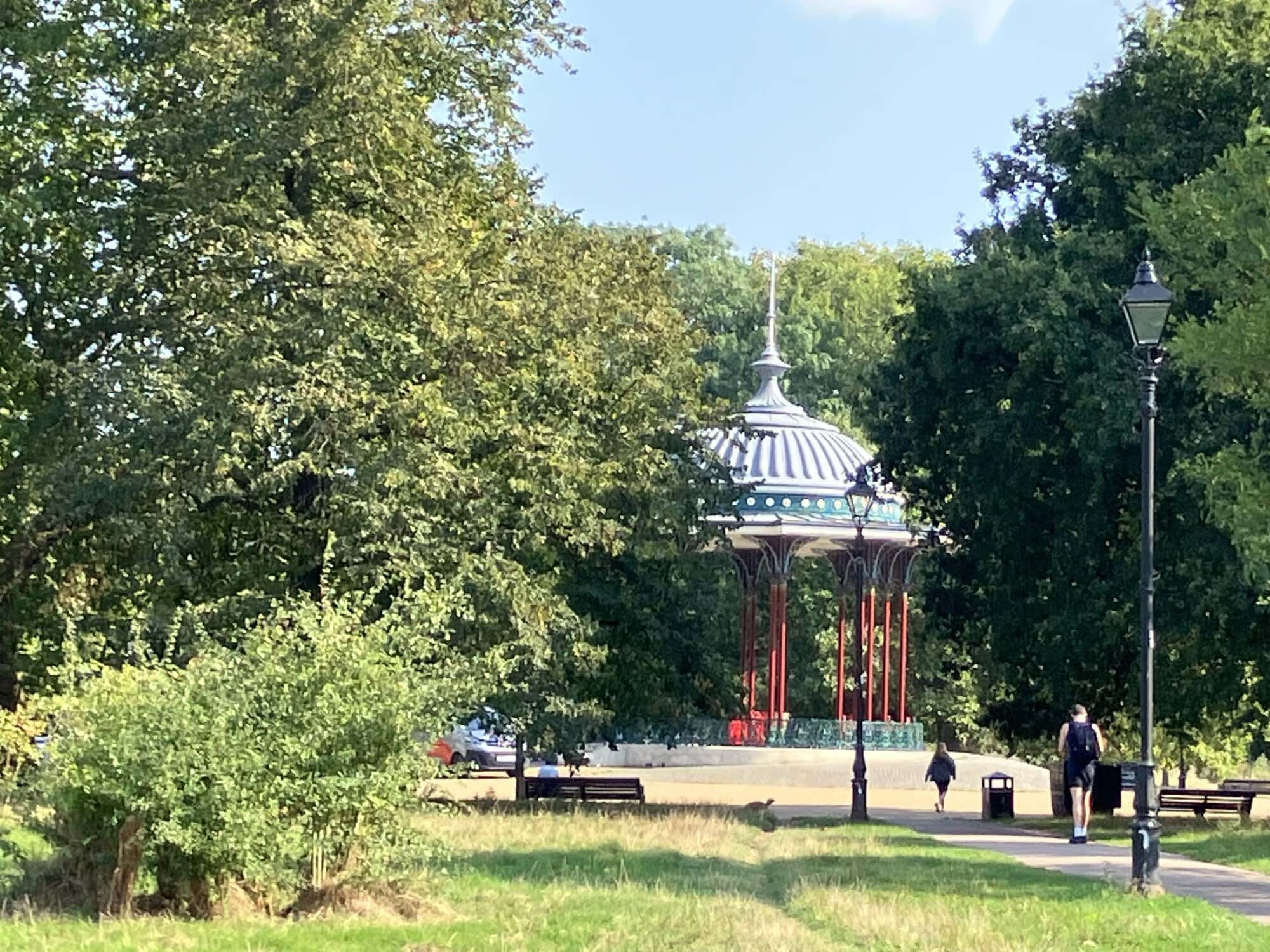
Mention should also be made of the 650 volunteers who regularly pick up litter and the 200 watering volunteers who keep the new trees watered, as well as the collaboration between Pear Tree Café, CCMAC, and Friends of Clapham Common, on the recent significant refurbishment of the toilets near the bandstand.
Clapham Common is already being sustained through a combination of private and public funding and an army of volunteers with an increasing awareness of the need for a joint Council and community response. All parties are acutely aware of the tension balancing the conservation with the commercialisation of the Common. However the balance is struck, it is difficult to please everyone. In the years to come we will need clear, transparent conversations that equally involve the Council and the public, to create greater awareness of the challenges, the compromises and the cooperation that are required to maintain Clapham Common to the standard that the community expects.